
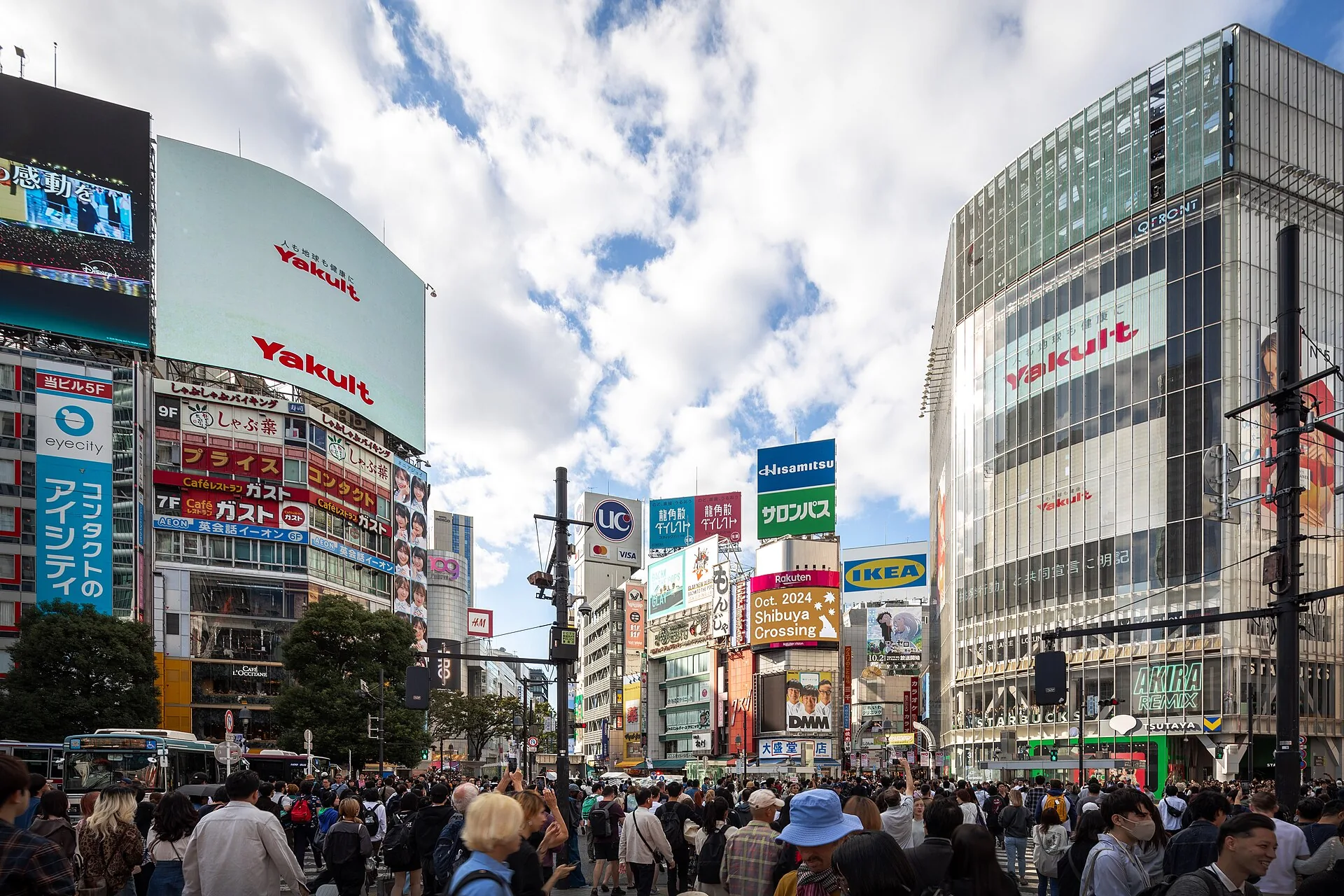
Tokyo is not one walkable sightseeing center. The useful unit is a neighborhood group: Asakusa and Ueno to the east, Harajuku and Shibuya to the west, or the market and streets around Tsukiji and Ginza. You can travel across the city; you do not need to do it after every stop.
For a short first stay, choose two contrasting days rather than trying to collect every landmark. An eastern day lets a temple district and a park set the pace. A western day changes the scene to shrine woods, shopping streets and a busy crossing. A third day can make food and central-city browsing the main event.
Choose a useful base
Ueno / Asakusa
Consider an eastern base if the old-city areas are your priority. Check the exact station and the final walk, especially when comparing Narita routes.
Shinjuku / Shibuya
Useful when you expect to spend evenings in the west. A train that ends elsewhere may still leave a substantial transfer and station walk.
Tokyo Station / Shinagawa
Consider the onward journey as well as sightseeing. Staying near a useful rail hub can simplify a move to Kyoto, but the station name alone does not locate your hotel exit.
Build your days
Tokyo / Asakusa / Ueno
Eastern Tokyo: Asakusa, then an optional Ueno afternoon
A temple-centered morning, a proper lunch and the choice of a park or a single museum. Make the second district optional.
Tokyo / Meiji Jingu / Harajuku / Shibuya
Western Tokyo: shrine woods to Shibuya streets
Begin with space and trees, then let a busier neighborhood become the second half of the day rather than another early deadline.
Tokyo / Tsukiji / Ginza / Tokyo Station area
Central Tokyo: a market morning and a flexible city afternoon
Give food the first claim on the day. Let Ginza and the station district fill the time that remains, rather than competing with a long lunch.
What to leave out
Give Tokyo another day if contrasting neighborhoods matter more than adding another city. Cut a district before cutting every meal break.
A meal that fits
Tokyo food guide →Sources & useful checks
Official information checked on 2 November 2026. Follow the operator or venue for changes and your travel dates.