
The day, in order
- Morning
The slot you booked
The Fujiko F. Fujio Museum runs on timed entry, several slots a day, and sells nothing at the door: the ticket is bought in advance and checked on arrival. Build the morning around the earliest slot you can get and treat a walk-up visit as impossible, because it is.
Read the city guide → - Late morning
Inside the museum
The rooms are given over to original drawings and to the working life of the artist who lived in this city for decades and drew under the name Fujiko F. Fujio. A history road and the rooms named for him carry the rest. Photography is allowed in some rooms and not others, without flash, video or tripods, so follow the signs.
- Lunch
Between the two
Lunch is easiest at one end of the line or the other: both stations have the everyday spread of the suburbs, and the shuttle runs often enough that a detour costs little.
- Afternoon
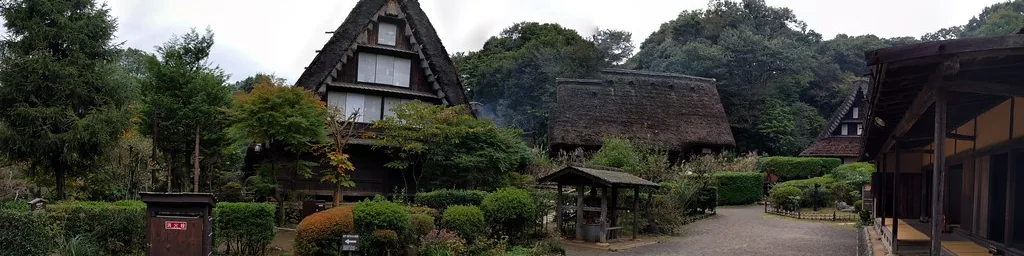
Twenty-five farmhouses
The Japan Open-Air Folk House Museum opened in 1967 to save buildings that were disappearing from the countryside. Twenty-five structures stand in the park, from thatched farmhouses to a watermill, a boatman's hut and a kabuki stage, and every one of them is a designated cultural property of the national, prefectural or municipal level.
- Late afternoon
Indigo and the far gate
The craft hall by the west gate runs indigo dyeing sessions, and the park has its own soba restaurant. The Taro Okamoto Museum of Art shares the same park, reached from the inner gate, if the afternoon still has room in it.
- Evening
The autumn night opening Optional
On a handful of late-autumn evenings the farmhouses are lit and the park stays open after dark, with a sake tasting in the illuminated buildings on some of them. It is a date-specific outing, so check the museum's own calendar before planning an evening around it.
Make it lighter
The timed museum slot and a walk through the farmhouses, with the evening light event left out. Built around one fixed booking.
Kawasaki Daishi → The waterfront by day, the factory lights by night → Read the Kawasaki city guide →
If the weather changes
Both halves are half indoors: the museum is a building, and the farmhouses are open to the roof. Rain shortens the park but does not cancel it, and the museum slot is fixed, so keep the order and shorten the afternoon.
Check before leaving
Book the museum slot before anything else: entry is by date and time and there are no tickets at the museum itself. Check the farmhouses' calendar as well, since one building has been closed for construction, and check the park's night openings if your dates fall in late autumn.
Sources & useful checks
Official information checked on 13 November 2026. Follow the operator or venue for changes and your travel dates.