
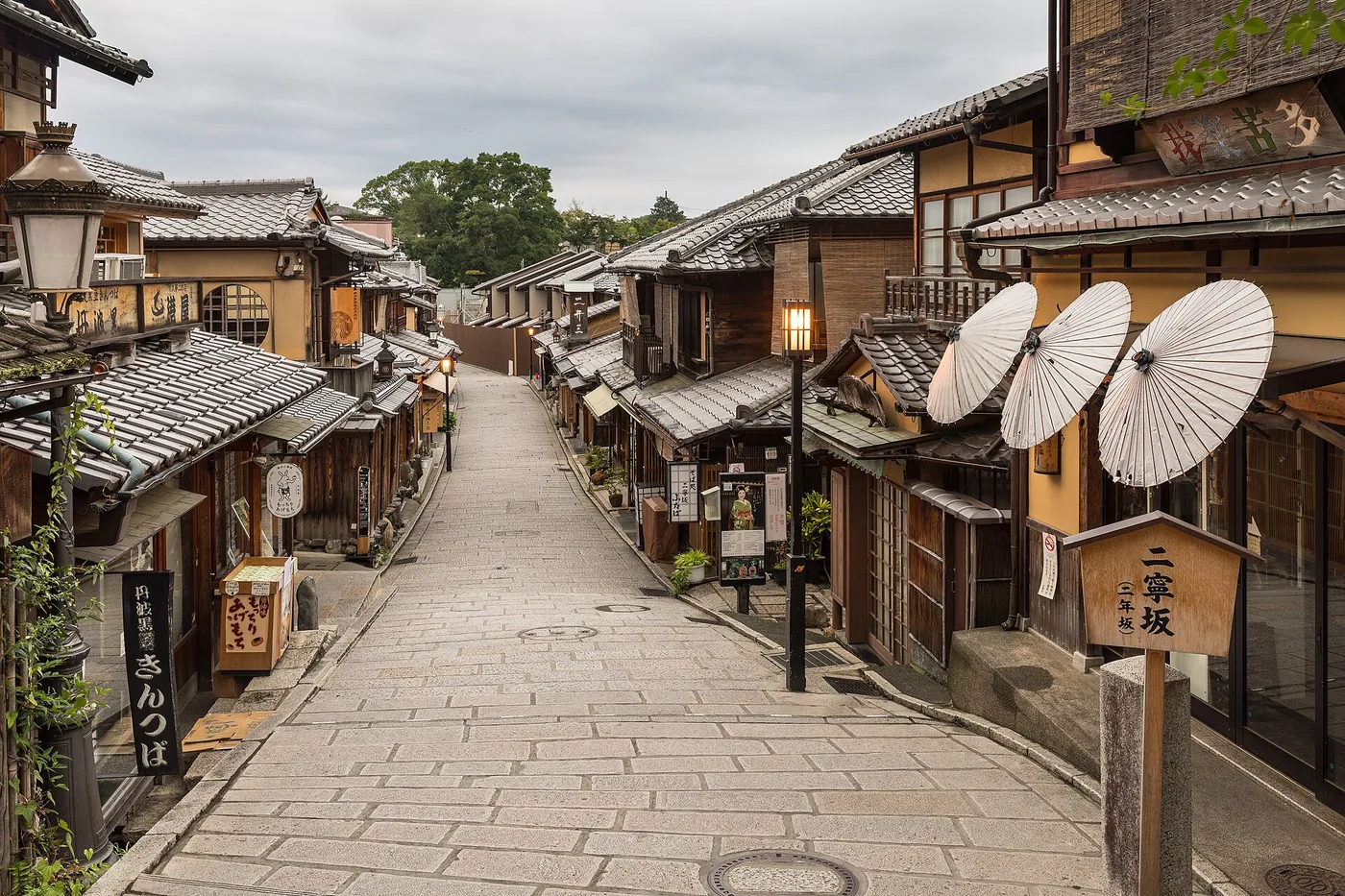
Kyoto's familiar pictures belong to different parts of the city. Higashiyama is an eastern walking day; Fushimi Inari is a separate shrine visit to the south; Arashiyama sits in the west. Putting all three into one day turns most of the experience into transfers and deadlines.
Choose a main area each morning and decide in advance what you are willing to omit. A short, attentive visit is more useful than a promise to finish every staircase or temple precinct. These are living neighborhoods and religious places, with residents and worshippers using the same streets.
Choose a useful base
Kyoto Station
Practical for rail arrivals and departures. Work out how you will reach the day's area rather than assuming everything starts outside the station.
Central Kyoto
A useful choice when meals, the river and the central shopping streets shape your evenings. Check the nearest subway or rail station, not just the hotel description.
An area-led stay
Staying near the part of Kyoto you most want to explore can reduce backtracking. Balance that benefit against luggage, check-in and the next intercity journey.
Build your days
Kyoto / Higashiyama / eastern streets
Eastern Kyoto: Higashiyama without a race
Choose a temple approach, walk the surrounding streets and keep the afternoon for the places you notice along the way.
Kyoto / Fushimi Inari / central Kyoto
Southern Kyoto: Fushimi Inari, then a central-city choice
Let the shrine visit set the pace. A shorter route is valid; central Kyoto is an optional second chapter, not the reward for finishing a mountain walk.
Kyoto / Saga / Arashiyama
Western Kyoto: Arashiyama beyond one photograph
Build a day around the western area, with a short bamboo-grove visit and enough time for the river, a break and the return journey.
What to leave out
Add a Kyoto day when you want both eastern streets and western scenery. Do not make Arashiyama a rushed add-on after a full eastern route.
A meal that fits
Kyoto food guide →Sources & useful checks
Official information checked on 2 November 2026. Follow the operator or venue for changes and your travel dates.