
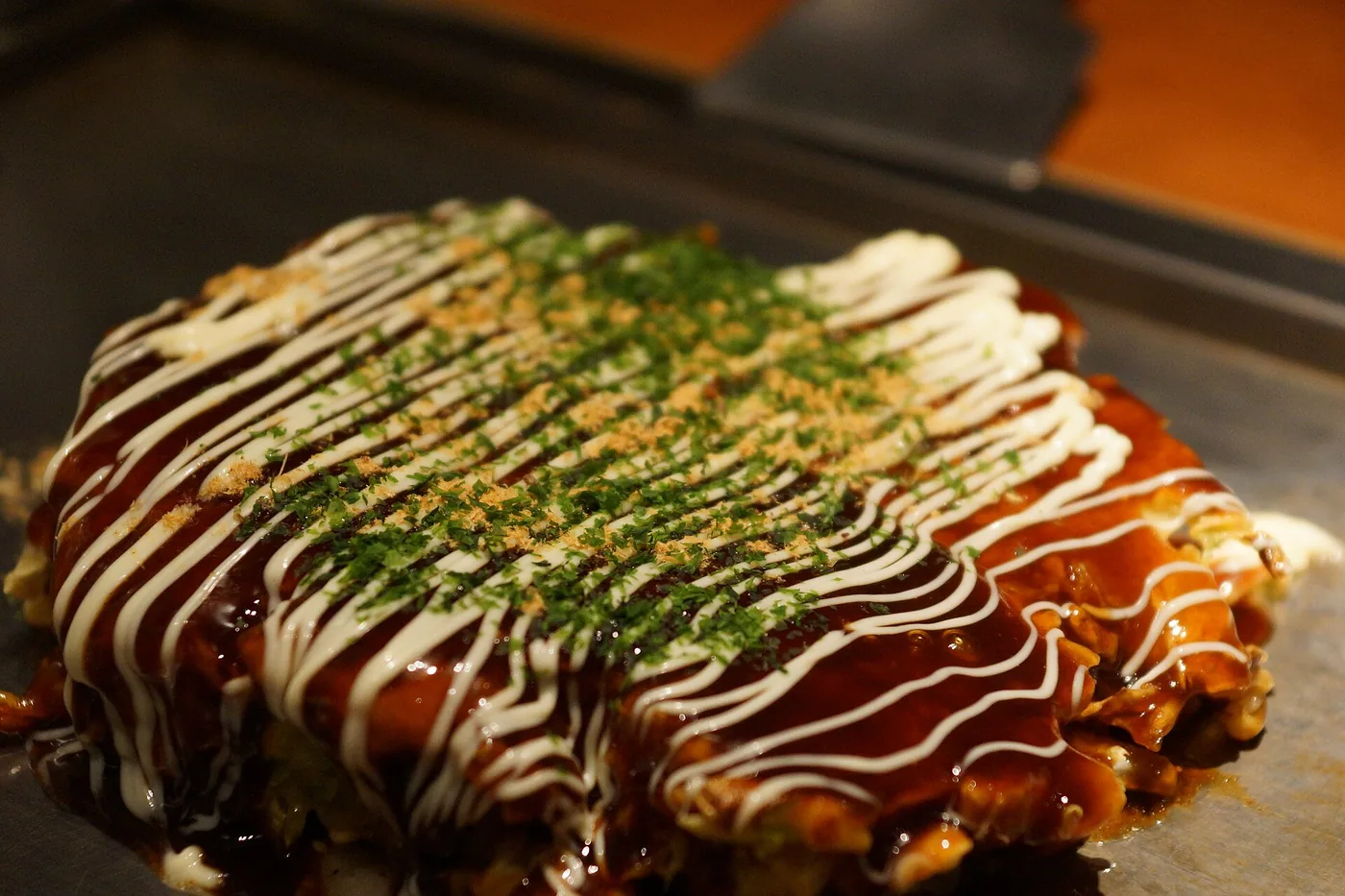
Do not confuse the two formats
Takoyaki are small cooked batter balls with octopus; okonomiyaki is a larger griddle-cooked dish commonly built around cabbage and batter. Toppings and recipes vary. Osaka's tourism guide describes both as part of the city's food culture, but they do not require the same appetite or the same kind of stop.
Try a small snack when you still want to walk and decide what comes next. Choose a seated okonomiyaki meal when you want dinner to slow the evening down. Ordering both immediately because they appear on a list may leave no room for the experience you actually wanted.
Use Dotonbori as an area, not a ranking
The signs and canal make a recognizable evening setting. They do not establish which kitchen is best or which queue is worth your time. Look at the menu, the available space and what the business can offer before committing.
Our suggestion is to set one evening food priority and keep the rest unbooked. Walk a little, stop for the meal and leave a comfortable route back to your accommodation. You do not need a timed attraction afterward to make the day complete.
Ask who cooks
Some okonomiyaki restaurants cook the dish for you; others may offer a different format. Ask before trying to manage an unfamiliar hot plate. Watch the staff's guidance rather than assuming the setup is self-service.
Octopus, fish-based stock, sauces and toppings may matter to your dietary needs. A familiar English label does not answer every ingredient question. Confirm with the venue and do not treat this guide as an allergy assessment.
Match the meal to the day
A park-centered day can end with a single proper dinner. A Namba and Shinsaibashi day leaves more flexibility for several smaller stops. A late airport arrival calls for whatever suitable meal is still available near your base, not a promise to find a particular dish before bedtime.
Sources & useful checks
Official information checked on 2 November 2026. Follow the operator or venue for changes and your travel dates.